Why Bees Return After Removal In Phoenix, AZ
Homeowners often face a second bee infestation weeks after treating the first one. A major reason for Bees Coming Back After Removal Phoenix AZ is incomplete extraction. Killing the live bees leaves wax, honey, and pheromones behind in the wall. This guide explains why scout bees find these old nests and how proper comb cutout stops the cycle.
Why Do Bees Keep Coming Back?
Pheromones dictate bee behavior. A honey bee colony uses chemical scents to mark its home. These scents absorb deep into wood, drywall, stucco, and insulation. Even after every physical bee is gone, the smell remains.
When a new swarm travels through your neighborhood, they send out scout bees to find a suitable home. These scouts are highly sensitive to leftover pheromones. If they smell an old hive inside your block wall or attic, they immediately return to the swarm and lead them to the exact same spot. This is the primary driver of repeat infestations.
Why Extermination Guarantees Bees Coming Back After Removal Phoenix AZ
| Feature | Standard Extermination | Live Removal & Cutout |
|---|---|---|
| Live Bees | Killed with pesticides | Vacuumed alive and relocated |
| Honeycomb | Left inside the wall | Physically cut out and removed |
| Honey & Wax | Melts in summer heat | Extracted completely |
| Pheromones | Remain strong | Scraped and cleaned |
| Repeat Risk | Extremely high | Very low |
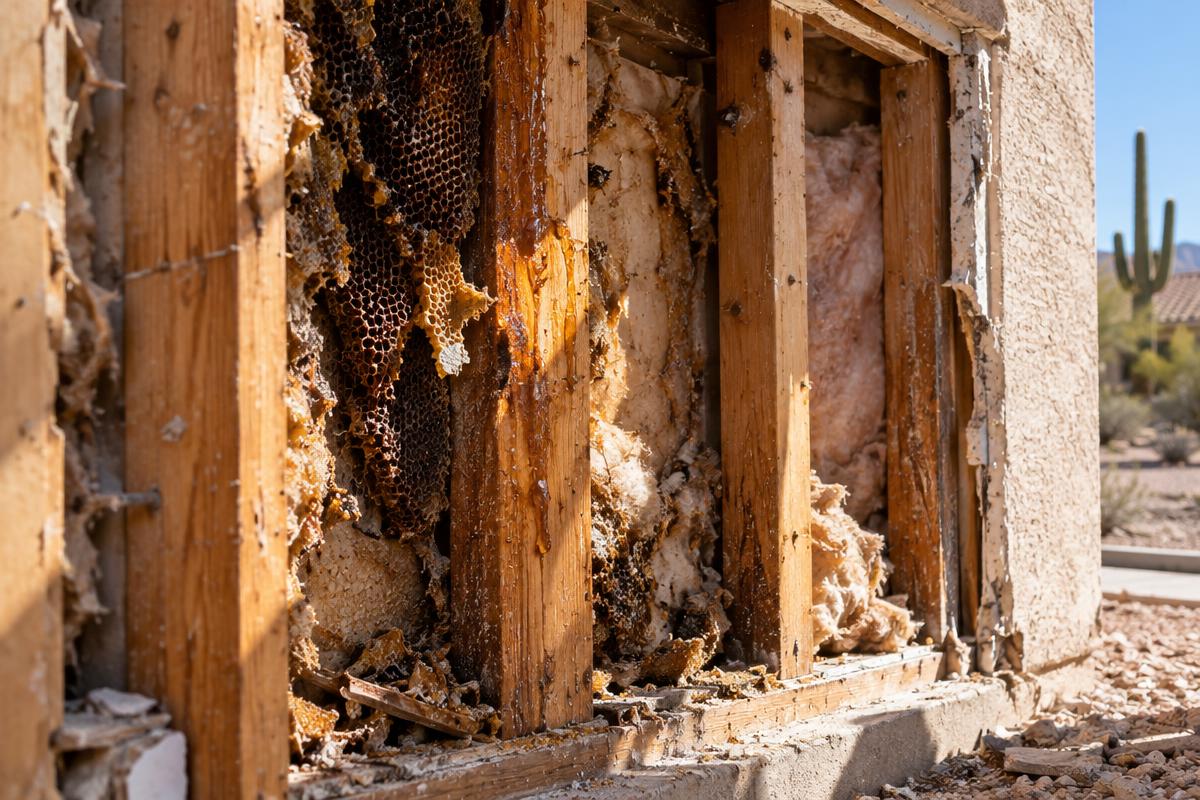
Pest control sprays do not solve the problem. Leaving fifty pounds of honey and wax inside an Arizona wall guarantees melting, structural damage, and a new swarm next spring. The only permanent fix is live bee removal with complete comb cutout.
Common Areas Bees Re-infest in Phoenix Homes
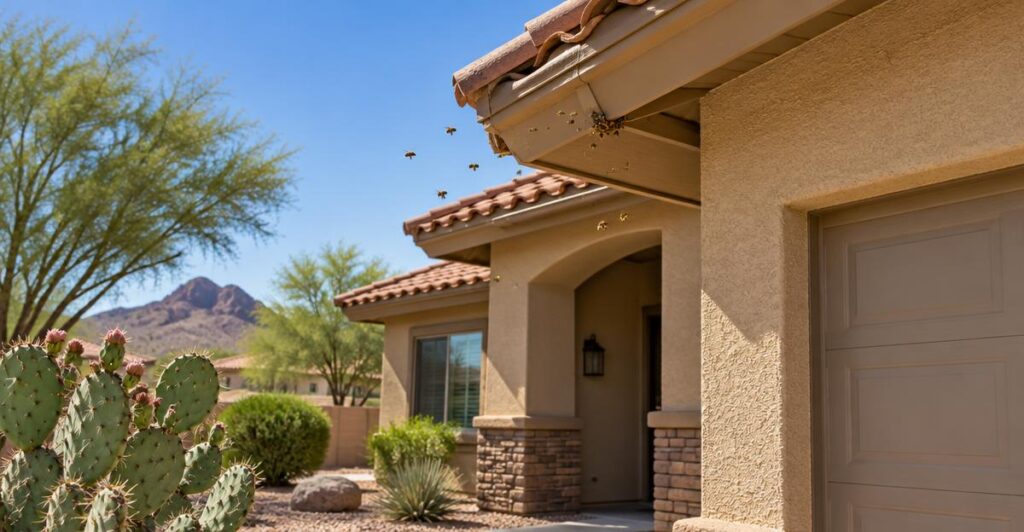
Tile roofs are especially vulnerable. Spanish tile creates natural tubes that lead directly to the roof decking. Missing bird stops invite scout bees to explore the gaps.
DIY Mistakes That Make the Problem Worse
Homeowners often try to handle the problem themselves before calling a professional. These common DIY tactics rarely work and usually cause severe damage.
Never plug a hole while bees are flying in and out. Trapping a colony forces them to chew through interior drywall to escape.
Bee Infestation Prevention Phoenix AZ
To truly stop bees from returning, you must physically alter the environment. Proper prevention requires removing the attraction and blocking access.
Full Comb Removal
Every piece of wax, honey, and brood must be cut out of the wall. Leaving even a small piece leaves a pheromone trail.
Scent Masking
After scraping the cavity clean, professionals apply specialized masking agents or paints to neutralize any lingering pheromones absorbed into the wood.
Exclusion Work
The original entry point must be sealed with heavy materials like hardware cloth, metal flashing, or professional grade sealants.
Property Auditing
Preventive maintenance involves checking the rest of the property for similar unsealed gaps before scout bees find them.
Sealing is the final step. Proper exclusion work ensures that even if scout bees smell old pheromones, they physically cannot enter the wall void.
The 10 Step Removal and Prevention Process
True removal requires opening the structure, extracting the entire hive, and repairing the damage. Here is exactly what we do.
Locate the Hive
We track the flight path and use thermal imaging to find exactly where the main colony is hiding inside the wall or roof.
Expose the Cavity
We carefully open the stucco, drywall, or roofing material to expose the entire honeycomb structure.
Vacuum the Live Bees
Using a specialized low pressure bee vacuum, we safely capture the live bees into a transport box without harming them.
Cut Out the Comb
We slice the wax comb away from the studs and drywall, removing all honey, pollen, and brood.
Find the Queen
Locating and securing the queen is mandatory. Without her, the remaining bees will not stay together.
Scrape and Clean
We scrape the remaining wax residue off the wood framing to remove as much of the pheromone footprint as possible.
Apply Scent Mask
We treat the empty cavity to neutralize the remaining odors so future scout bees are not attracted to the spot.
Fill the Void
We pack the empty space with insulation to ensure a new colony physically cannot fit inside the wall.
Seal the Entrance
We permanently close the exterior hole, crack, or gap that allowed the bees to enter in the first place.
Relocate the Hive
We transport the live bees and their queen to a local apiary where they can thrive safely.
Cutting out the comb is non-negotiable. Any service provider who sprays the wall and walks away is simply setting you up for a repeat infestation.
What Drives the Cost of Proper Bee Removal
Pricing for complete extraction depends entirely on the location of the hive and the construction of your home. These factors determine the final cost.
If a price sounds too good to be true, they are not cutting out the comb. Cheap removals almost always mean toxic sprays and guaranteed return visits.
How to Choose the Right Bee Removal Company
Before you hire anyone to touch a bee colony on your property, you need to ask the right questions. Your goal is permanent removal, not a temporary fix.
- Do you perform live removals, or do you use pesticides?
- Will you physically open the structure to cut out the honeycomb?
- Who handles the structural repairs after the wall is opened?
- Do you provide exclusion services to seal the entry points?
- Are you licensed and insured for structural work?
- What kind of warranty do you provide against the bees returning to the same spot?
How to Stop Spring Swarms
Spring is prime swarming season in Phoenix. Taking proactive steps in late winter can save you thousands of dollars in wall repairs.
- Walk the perimeter of your home and look for missing stucco or cracked block walls.
- Install heavy wire mesh behind all attic vents and crawl space covers.
- Cap the open tops of all cinder block privacy walls.
- Ensure bird stops are properly installed under every row of roofing tiles.
- Seal gaps around plumbing and electrical conduits where they enter the exterior wall.
- Check irrigation valve boxes and ensure the lids sit flush and tight.
- Fill abandoned woodpecker holes in siding or eaves.
If you prefer to have a professional inspect and secure your home, our preventative sealing service closes these vulnerable gaps before the bees ever arrive.
Frequently Asked Questions
Why are bees back after the exterminator sprayed?
The exterminator killed the live bees but left the honeycomb, honey, and pheromones inside the wall. New scout bees smelled the leftover hive and brought a new swarm to take it over.
How long do bee pheromones last in a wall?
Pheromones can last for several years. The scent absorbs deeply into wood framing and drywall. Until the old wax is removed and the area is sealed, it will continue to attract bees.
Can I just caulk the hole to stop them?
No. If bees are currently inside, caulking the hole traps them. They will chew through interior drywall to escape into your house. If the hive is empty, caulking the outside does not stop the honey inside from melting and ruining your walls.
What happens to the honey if it is left behind?
Without live bees to cool the hive, summer heat quickly melts the wax. The honey will run down your wall studs, soak into your drywall, stain your ceiling, and attract ants and rodents.
How do you keep bees away permanently?
You must physically cut out all existing comb, clean the cavity, and seal the exterior openings permanently so no insect can fit inside the wall.
Live Bee Removal Across the Valley
The Buzzing Bee is a family owned live removal company based in Phoenix. We extract hives, cut out the comb, and seal the structure properly so the bees never return. We serve homeowners, commercial properties, and HOAs across the entire metro area.
Stop the Cycle of Repeat Bee Infestations Today
If you are dealing with bees returning to the same wall, roof, or irrigation box, extermination sprays will never solve the problem. You need the honeycomb completely removed and the structure sealed by professionals.