Honeycomb Removal And Repair In Phoenix, AZ
Removing an active bee colony is only part of solving a structural bee infestation. Honeycomb left inside a wall, roof, attic, shed, or ceiling can continue causing problems long after the bees are gone. The Buzzing Bee LLC provides professional honeycomb removal and structural repair in Phoenix and surrounding Maricopa County communities, helping property owners remove hive materials and restore affected areas.
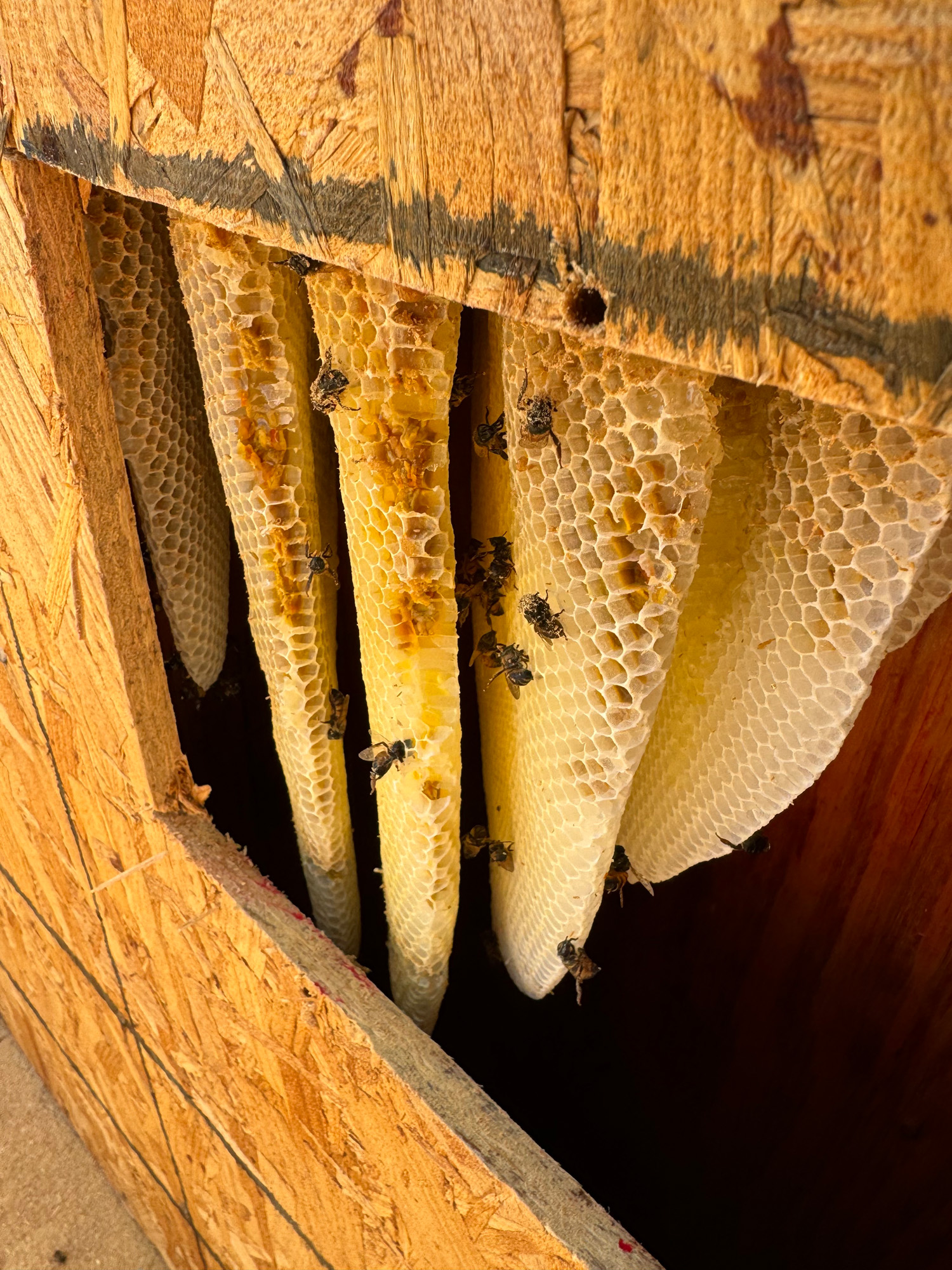
Established hives can contain honey, wax, brood, pollen, and colony scent inside hidden structural spaces. These materials may attract new bees, ants, rodents, moths, and other pests. During Arizona heat, stored honey may also soften and leak into drywall, ceilings, insulation, or exterior finishes.
Our technicians carefully access the hive location, remove accessible honeycomb and remaining colony materials, clean the affected space, and repair the opening created during removal. When an active colony is still present, the property may first require live bee removal before the structural cleanup and repair can be completed.
Why Honeycomb Should Not Be Left Inside A Structure
Honeycomb can remain active as an attractant even after the original colony has been removed. Wax and hive scent can signal to future scout bees that the location has previously supported a colony. If the entry point remains accessible, another swarm may investigate or reuse the same wall, roof, attic, or shed cavity.
Honey stored inside the comb may also create property damage. Phoenix temperatures can cause honey to soften and seep through porous materials, leaving stains, odors, sticky residue, and damage to paint, drywall, insulation, and ceiling surfaces. Thorough hive cleanup helps address the source of these problems instead of removing only the visible bees.
- Professional honeycomb removal from walls and structural cavities
- Removal of accessible honey, wax, brood, and hive residue
- Honeycomb removal from drywall and interior wall spaces
- Hive cleanup from stucco walls, roofs, and flat roof areas
- Structural access repair following honeycomb removal
How To Tell If Honeycomb Is Inside Your Walls
A concealed hive is not always visible from outside the property. Homeowners may first notice bees repeatedly entering the same crack, roof edge, vent, utility opening, or gap in stucco. Consistent traffic through one location often suggests that bees are traveling to and from an established colony.
Other warning signs may include buzzing inside a wall or ceiling, dark discoloration, sticky residue, unusual odors, or insects gathering near an interior surface. Honey leaks can sometimes appear after a colony has been removed if comb remains inside the structure.
If you suspect a hidden hive, avoid sealing the entrance before the colony and honeycomb have been professionally evaluated. Blocking the opening can force bees farther into the structure or cause them to find another exit into an interior room.
Contact The Buzzing Bee LLC to request an inspection and honeycomb removal quote.
Common Honeycomb Locations In Phoenix Properties
Bee colonies often select enclosed spaces that provide shade, protection, and room for the hive to grow. Our technicians evaluate the bee entrance, activity pattern, and surrounding structure to determine where the comb may be located and how the area can be accessed.
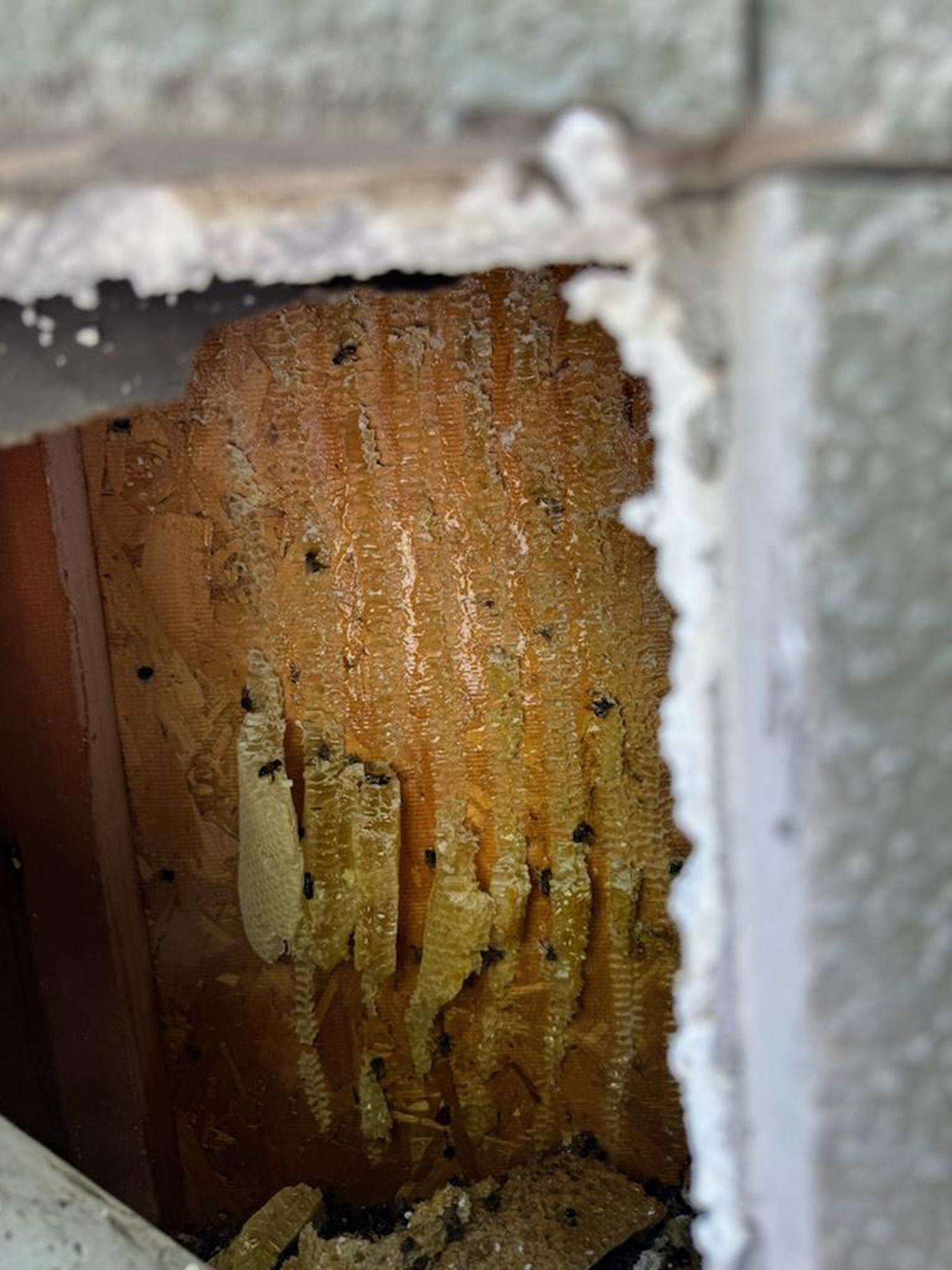
Bees may build comb between wall studs after entering through an exterior crack, utility opening, vent, or roof connection.
Small gaps in stucco, trim, block walls, and exterior penetrations can provide access to protected wall cavities.
Roof edges, fascia gaps, parapet areas, vents, and cavities beneath roofing materials may support large concealed hives.
Bees entering near a roofline may establish comb above ceilings or near insulation where the hive remains hidden.
Quiet outdoor structures may provide undisturbed cavities behind walls, beneath roofs, or between framing materials.
Patio covers, columns, enclosed equipment areas, and other exterior structures may contain hidden honeycomb.
How Honeycomb Removal And Repair Works
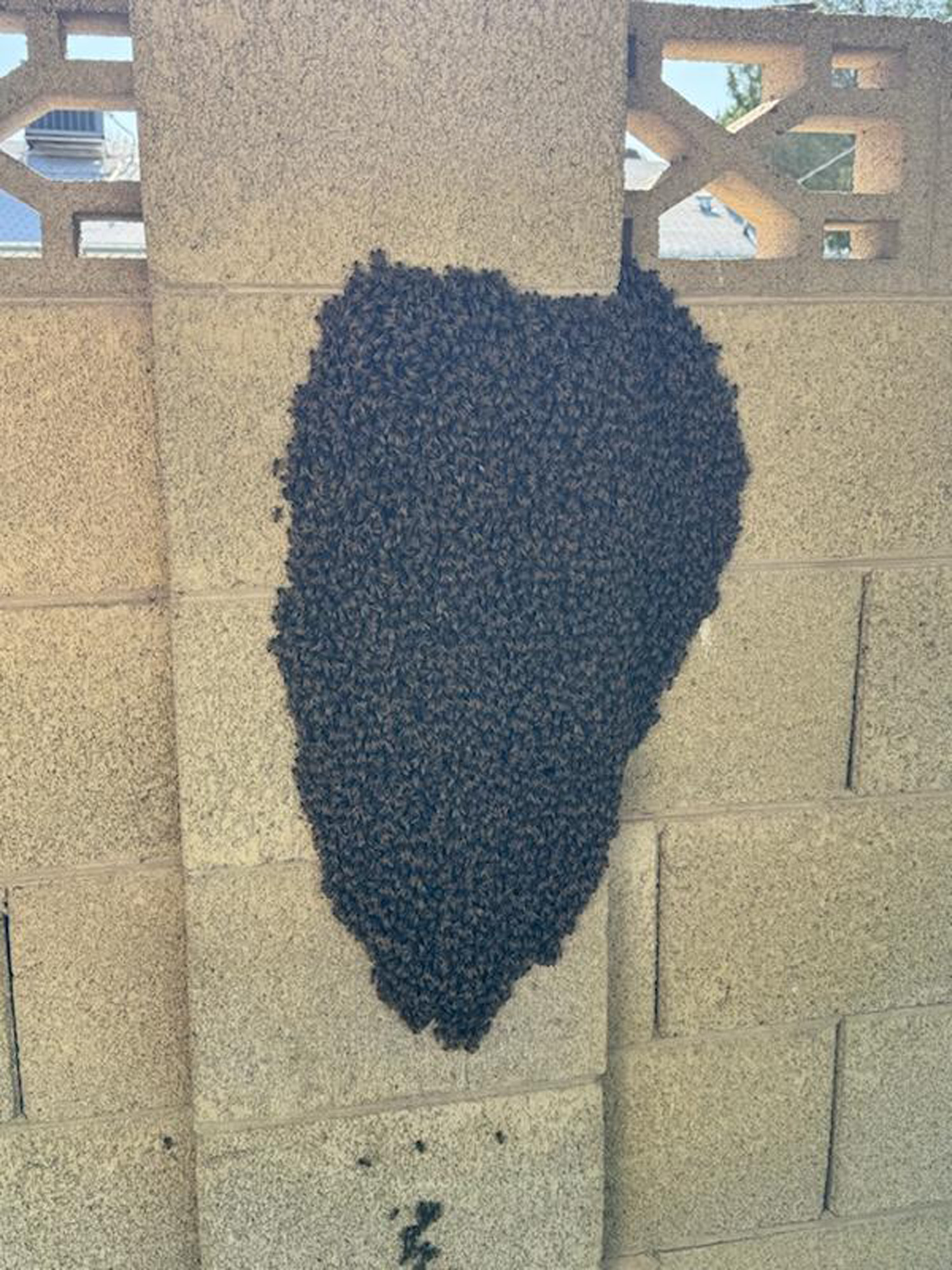
The exact removal method depends on the hive location, amount of comb, construction materials, and whether the colony is still active. Our process focuses on removing the source of the infestation while limiting unnecessary disruption to the property.
Locate The Hive
We evaluate bee traffic, structural openings, visible hive materials, interior signs, and the likely position of the honeycomb.
Remove Bees And Comb
The affected area is carefully accessed so the colony and accessible honeycomb, wax, honey, brood, and residue can be removed.
Clean And Repair
After hive materials are cleared, the opening is cleaned and repaired to restore the structure and help reduce future bee access.
Repairing Walls, Stucco, Roofs, And Other Hive Locations
Accessing a concealed hive may require opening a section of drywall, stucco, roofing, siding, or another building surface. The Buzzing Bee LLC provides structural repair as part of the honeycomb removal process when applicable, helping restore the area after the hive has been cleared.
Repairs may involve closing wall openings, restoring drywall or stucco, addressing accessed roof or flat roof areas, or repairing sections of a shed or outdoor structure. The exact scope depends on the hive location, construction type, existing condition of the materials, and the amount of access needed for removal.
Our goal is to leave the affected area secure and as close as reasonably possible to its previous condition while addressing openings that could allow future bee activity.
View examples of completed bee and honeycomb removal projects in our bee removal gallery .
What Can Happen If Honeycomb Is Left Behind?
Leaving hive materials inside a structure can create continuing problems even when bee activity appears to have stopped. The extent of the damage depends on the size of the hive, amount of stored honey, location of the comb, surrounding materials, and temperature inside the cavity.
Wax, honey, and colony scent can attract scout bees and increase the chance of another colony investigating the same location.
Heat can cause stored honey to soften and seep through drywall, ceilings, insulation, paint, and other building materials.
Remaining honey and brood may attract ants, moths, rodents, and other pests into the wall or roof cavity.
Abandoned hive materials can create noticeable odors as honey, brood, wax, and organic material break down.
Honeycomb Removal For Homes And Businesses
Structural hives can affect houses, rental properties, commercial buildings, offices, retail locations, storage facilities, sheds, and other properties. We provide honeycomb removal and repair for residential and commercial customers throughout Phoenix and surrounding communities.
Property owners and managers should request an inspection when bees are repeatedly entering a building, buzzing is heard inside a wall, or honey stains begin appearing on ceilings or interior surfaces. Early evaluation may help limit the amount of comb produced and reduce the extent of structural access required.
Visit our Phoenix bee removal service areas page to review the communities served by The Buzzing Bee LLC.
Related Bee Removal Services For Your Property
The correct service depends on whether you are dealing with scout bees, an exposed swarm, an active structural colony, abandoned honeycomb, or a wasp nest. Explore our related services to find the most appropriate next step.
Frequently Asked Questions About Honeycomb Removal
Learn why complete hive cleanup matters, where honeycomb is commonly found, and what to expect during structural repair.
Why Is Honeycomb Removal Necessary After Bee Removal?
Honeycomb contains wax, honey, brood, pollen, and colony scent that may attract new bees and other pests. Honey can also soften in Arizona heat and leak through walls or ceilings. Removing the comb helps address the entire infestation rather than only removing the visible bees.
Where Is Honeycomb Commonly Found Inside A Home?
Common locations include drywall cavities, stucco walls, roof cavities, flat roof areas, attics, ceilings, sheds, patio structures, and other enclosed spaces. Bees often enter through a small exterior gap and build comb inside a much larger hidden area.
What Happens If Honeycomb Is Left Inside A Wall?
Honeycomb left behind may attract another colony, ants, moths, rodents, and other pests. Stored honey can leak into drywall, insulation, ceilings, paint, and flooring. Remaining hive material may also create odors and recurring activity around the original entrance.
Do You Repair The Wall Or Roof After Removing The Hive?
Honeycomb removal services typically include repair of the area opened to access the hive when applicable. Repairs may involve drywall, stucco, roof areas, flat roofs, sheds, or other structural surfaces. The exact repair depends on the hive location and existing condition of the property.
How Do I Know If Honeycomb Is Inside My Wall?
Warning signs may include steady bee traffic through one exterior opening, buzzing inside a wall or ceiling, sticky residue, dark stains, unusual odors, or insects gathering near an interior surface. A professional inspection can help determine whether an established structural hive is present.
Can I Seal The Opening After The Bees Leave?
The opening should not be sealed until the colony and hive materials have been evaluated. Sealing an active entrance may trap bees inside the structure or force them to find another route. If honeycomb remains, closing the opening does not resolve the risk of leaks, pests, odors, or future bee activity.
Can Honeycomb Damage Drywall Or Ceilings?
Yes. Honey stored inside the comb may soften and leak into nearby building materials, particularly during hot weather. This can cause discoloration, sticky residue, damaged paint, softened drywall, ceiling stains, and odors inside the property.
How Long Does Honeycomb Removal And Repair Take?
The time required depends on the hive location, size of the colony, amount of honeycomb, construction materials, access conditions, and repair needs. A small accessible hive may require less time than an extensive colony inside a wall, attic, roof, or flat roof cavity.
Visit our bee removal FAQ page for more information about structural hives, live bee removal, prevention, and wasp nest removal.
Request Honeycomb Removal And Repair In Phoenix
Seeing bees enter a wall, hearing buzzing inside a ceiling, or noticing honey stains around your property? Contact The Buzzing Bee LLC for professional honeycomb removal, structural hive cleanup, and repair throughout Phoenix and surrounding Valley communities.