

Understanding Arizona Bee Swarms: Timing, Identification, and Safe Responses
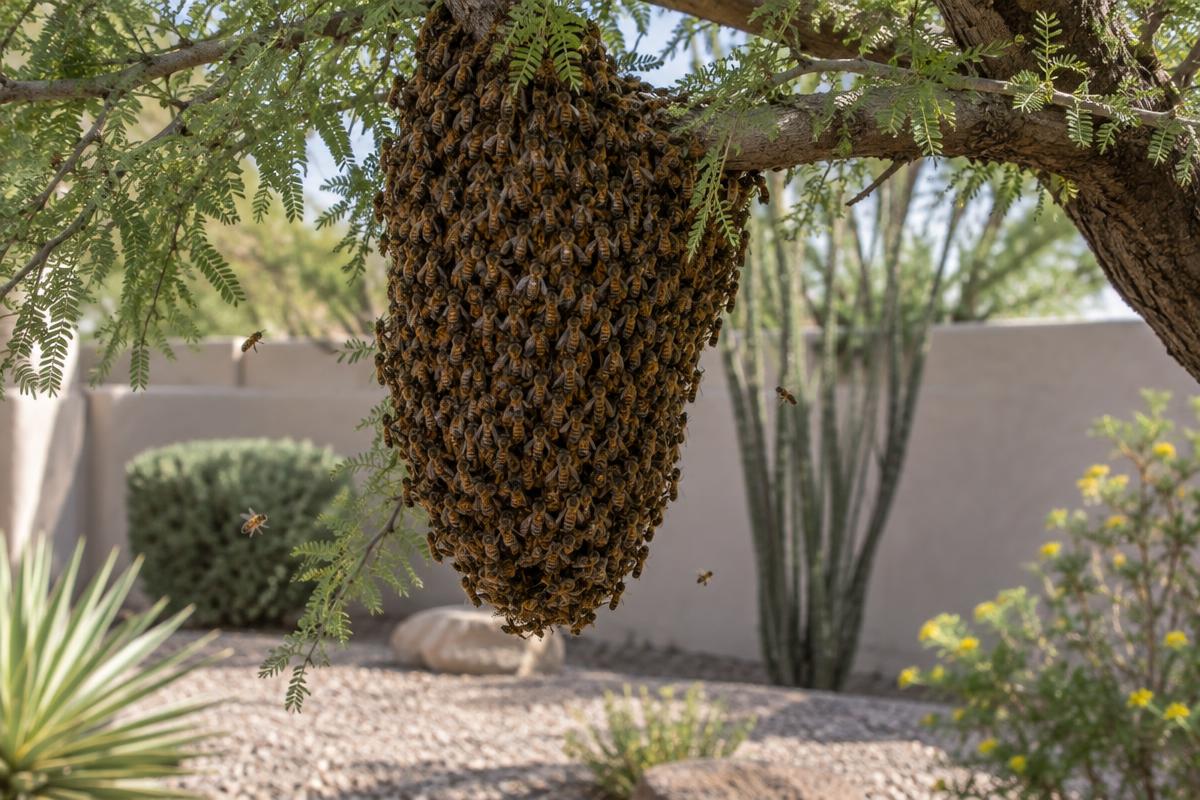
A massive cluster of bees hanging from a tree branch is a frightening sight for many homeowners. Knowing exactly when is bee swarm season in arizona helps you react correctly when thousands of bees suddenly appear. This guide explains why bees swarm, how long they stay, and how to respond safely.
When Is Bee Swarm Season in Arizona?
Spring triggers rapid colony growth across the Sonoran Desert. The primary bee swarm season phoenix residents experience runs from March through late May. A smaller secondary season occurs in September following late summer monsoon rains.
Swarming is a natural method of reproduction for honey bees. When an established hive gathers enough nectar and pollen, the colony population explodes. The hive becomes overcrowded. To solve this, the colony raises a new queen. Before she hatches, the old queen leaves the hive, taking roughly half of the worker bees with her. They fly a short distance and cluster together on an object to rest. This resting cluster is a swarm. They wait there while scout bees search the surrounding area for a permanent hollow cavity to build a new hive.
Swarm vs. Established Colony
| Feature | Resting Swarm | Established Colony |
|---|---|---|
| Structure | A tight, exposed ball of bees clinging to each other | Bees entering a void or building visible wax comb |
| Behavior | Generally docile, resting quietly in one place | Actively foraging and defending their entrance |
| Duration | Usually leaves within one to three days | Permanent until physically removed |
| Location | Tree branches, patio chairs, block walls, overhangs | Inside walls, attics, irrigation boxes, roof eaves |
| Correct Response | Wait for them to leave or call for live relocation | Requires live bee removal and cavity repair |
Once bees start building wax comb, they are no longer a swarm. They are an established colony. An established colony requires a live bee removal to cut out the comb, relocate the bees, and clean the space.
Where Arizona Bee Swarms Land
Most arizona bee swarms are temporary. As long as they remain in a tight ball on the outside of an object, they are simply waiting for directions from their scout bees.
What to Do If Bees Swarm on Your Property
Understanding what to do if bees swarm prevents dangerous encounters. Because swarming bees have no permanent home, no young brood, and no stored honey to protect, they are usually docile. Stings happen when humans or pets provoke them.
Keep Your Distance
Stay back at least 15 feet. Do not throw objects at the cluster or attempt to knock the bees down with a broom.
Secure Your Pets
Keep dogs and cats indoors. Dogs chasing flying insects or barking near the cluster can provoke a defensive response.
Stop Yard Work
Turn off lawnmowers, weed trimmers, and leaf blowers. Vibrations and loud mechanical noises aggravate resting bees.
Turn Off Sprinklers
Do not spray the cluster with a garden hose. Water hitting the bees will scatter them and create an angry, flying hazard.
Patience is the best initial response. If the swarm is high in a tree and out of the way, leaving them alone for 48 hours is the safest choice.
The Danger of Spraying a Swarm
Never treat honey bees like wasps. Spraying a wasp nest kills a few dozen insects. Spraying a honey bee swarm angers thousands of them.
When a Swarm Requires Professional Help
While waiting is often the right move, some situations demand immediate action. You should call for professional swarm relocation if the bees create a direct hazard or show signs of moving inside your home.
- The swarm lands right next to a primary doorway, walkway, or driveway.
- The cluster sits low to the ground in an area used by small children or pets.
- Someone in your household has a known allergy to bee stings.
- You notice a steady stream of bees investigating a crack in your stucco or a vent in your roof.
- The bees have been in the exact same spot for more than three days, indicating they may be building exposed comb.
- The swarm is located on commercial property, rental property, or an HOA common area where liability is a concern.
How Swarm Capture Works
Professional swarm relocation is fast, safe, and saves the bees. Because there is no wax comb or honey to cut out, a standard swarm capture follows a straightforward process.
Assess the Cluster
We confirm the bees are a resting swarm and not an established colony building wax comb deep inside a structure.
Secure the Area
We ensure residents, neighbors, and pets remain indoors and away from the immediate work zone.
Box the Bees
Using specialized equipment, we gently brush or vacuum the clustered bees into a ventilated transport box.
Capture the Queen
The success of the job depends on the queen. Once she is inside the transport box, the remaining worker bees naturally march inside to stay with her.
Relocate the Hive
We seal the box, clean the resting spot to remove attractant pheromones, and transport the bees to a local apiary.
Live relocation is the legal and ethical choice. Honey bees are vital agricultural pollinators. Relocating them keeps the local ecosystem healthy.
When a Swarm Moves Inside
If you ignore a swarm resting on your house, the scout bees might find an opening leading into your walls. Once the swarm marches inside, the job changes completely. They immediately begin secreting wax to build comb.
Calling early saves money. Capturing an exposed swarm takes less than an hour. Extracting an established colony from inside a wall takes hours and costs significantly more.
Stopping Swarms from Becoming Hives
You cannot stop wild bees from flying across your property, but you can stop them from moving in permanently. Prevention is a late winter job. You must prepare your home before the spring swarm season begins.
- Seal all cracks and gaps in your exterior stucco with quality caulk.
- Inspect and repair the heavy wire mesh behind your attic and foundation vents.
- Cap the open tops of hollow block fences and retaining walls.
- Fill gaps around plumbing pipes, electrical conduits, and air conditioning lines entering the house.
- Ensure your chimney has a tight fitting spark arrestor cap.
- Fill holes in dead trees and secure the lids on all ground level irrigation boxes.
If you are unsure where your home is vulnerable, our bee and wasp prevention service identifies and seals these access points for you.
Frequently Asked Questions
How long will a bee swarm stay on my property?
Most swarms stay between 24 and 72 hours. They use this time to rest while scout bees search the surrounding neighborhood for a permanent cavity to build a new hive.
Are swarming bees aggressive?
No. Because they have no permanent home, no young brood, and no stored honey to protect, swarming bees are usually docile. They only become defensive if you spray them, hit them, or provoke them.
Will the city fire department remove a bee swarm?
No. Municipalities and fire departments in Arizona do not remove bees from private property unless there is an active, life threatening emergency involving multiple stings.
What happens if the swarm moves inside my wall?
Once they move inside, they begin building wax comb and storing honey. You will need a professional live bee removal service to open the structure, cut out the comb, relocate the bees, and clean the cavity.
Can I just spray the swarm with insect killer?
Do not spray them. Retail sprays rarely penetrate the thick cluster. You will only anger the thousands of surviving bees, provoking an immediate and dangerous defensive reaction.
Swarm Relocation Across Phoenix and the East Valley
The Buzzing Bee provides safe, professional swarm capture and live bee relocation. We handle active swarms and structural hive extractions across the Phoenix metro area for homeowners, property managers, and HOAs.
Need Fast Bee Swarm Relocation?
Do not risk provoking a massive cluster of bees. Let our experienced technicians capture the swarm safely and relocate the pollinators before they move inside your walls to build a permanent hive.