
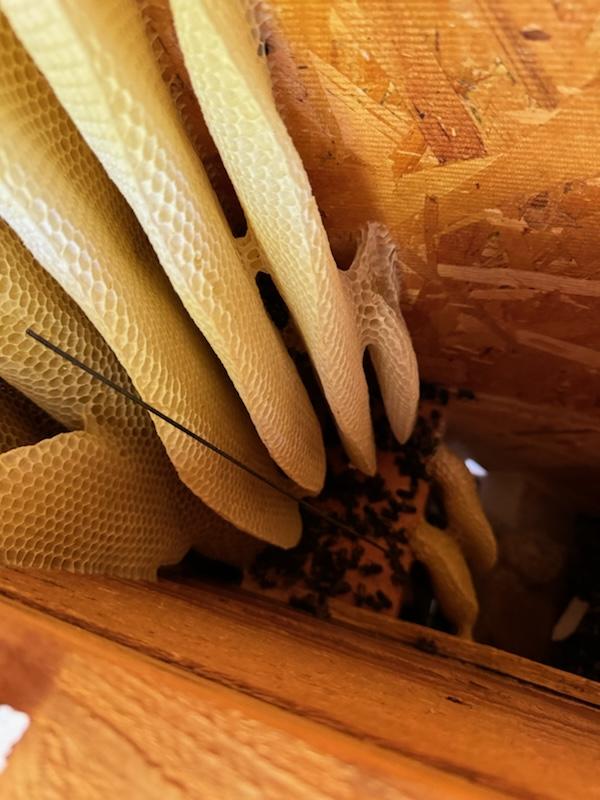

Signs of Bees in a Wall in Phoenix: 7 Warning Signs of a Hidden Hive
Hearing buzzing behind drywall or seeing bees repeatedly disappear into the same small opening can indicate an established honey bee colony inside a wall, attic, roofline, chimney, block wall, irrigation box, or other protected structural cavity.
What You Notice, What It Could Mean, and What to Do
| What You Notice | What It Could Indicate | What to Do |
|---|---|---|
| Bees repeatedly using one small opening | Possible established colony | Keep your distance and observe from a safe location |
| Buzzing or humming behind drywall | Bee activity inside a structural cavity | Schedule an inspection |
| Bees entering roof eaves | Possible attic, soffit, or wall-void colony | Do not seal the entrance |
| Dark or sticky residue near an opening | Possible hive material inside the structure | Have the area evaluated |
| Bees suddenly appearing inside the house | Possible pathway from a wall or ceiling cavity | Close off the room if practical and call for help |
| Exposed swarm outside | May be temporary rather than an established wall hive | Keep people and pets away and have it identified |
Signs That Bees May Be Established Inside the Structure
Bees Keep Using the Same Opening
Multiple bees repeatedly flying to the same crack, roofline opening, vent, utility penetration, block-wall void, or irrigation box is more meaningful than a few bees visiting flowers.
You Hear Buzzing Behind a Wall or Ceiling
Sound that consistently comes from the same wall, ceiling, chimney, or roofline is worth investigating, especially when it matches visible exterior bee traffic.
Bees Are Concentrated Around Roof Eaves
A small opening beneath an eave may lead into a much larger soffit, attic, wall, or roof cavity that is hidden from view.
You Notice Staining, Sticky Residue, or Odor
An established colony can contain wax comb, brood, stored pollen, and honey. Unusual residue near the same area as bee activity adds another clue.
Bees Begin Appearing Inside the House
Several bees repeatedly appearing in the same room can indicate a pathway from an occupied cavity, particularly when exterior activity is already known nearby.
Activity Centers on a Block Wall or Irrigation Box
Hollow block walls and irrigation boxes are common enclosed spaces around Valley properties and can provide protected nesting locations.
The Activity Persists at the Same Location
A temporary swarm may move on. Repeated traffic into one opening, persistent activity, and sound from inside the structure are more consistent with an established colony.
The opening itself may be surprisingly small. What matters most is the repeated traffic pattern and whether the activity persists at the same location.
Where Hidden Colonies Commonly Establish
The Buzzing Bee provides live bee removal and structural hive work across the Phoenix area. If the colony is inside a cavity, the job may also involve honeycomb removal and repair.
What Not to Do When Bees Are Inside a Wall
- Do not seal an opening while bees are actively entering and exiting.
- Do not spray the entrance and assume the structural problem is solved.
- Do not hit, drill, cut, or deliberately vibrate the wall to find the hive.
- Do not open the wall yourself when the location of the bees and comb is uncertain.
- Do not assume calm-looking wild honey bees will remain calm if the colony is disturbed.
- Keep children and pets away from the active entrance.
If bees become defensive, move quickly into an enclosed building or vehicle and protect your head and face while getting away.
Why the Difference Changes the Response
| What You're Seeing | Swarm | Possible Established Colony |
|---|---|---|
| Large cluster visible outside | Common | Less typical |
| Bees repeatedly entering a wall opening | Less typical | Strong warning sign |
| Buzzing from inside the structure | No | Possible |
| Activity persists at the same opening | Less likely | More likely |
| Comb inside a cavity | No established comb yet | May be present |
How Professionals Locate Bees Inside a Wall
Finding the exterior entrance is only the beginning. The visible opening tells you where bees are entering, but it does not always tell you where the comb sits inside the structure.
Watch the Flight Path
Consistent entry and exit patterns help identify the primary access point.
Evaluate the Structure
The technician considers what lies behind the exterior surface and how far the cavity may extend.
Listen for Activity
Sound can help narrow the suspected colony location when combined with exterior traffic.
Look for Supporting Evidence
Staining, residue, interior bee activity, and other clues help define the affected area.
Determine the Best Access Point
The goal is to reach the colony and hive material with as little unnecessary structural disruption as practical.
The entrance and the comb are not always directly opposite one another. That is why randomly cutting into drywall is a poor strategy.
Why Honeycomb Removal and Entry-Point Repair Matter
An established wall colony is more than the adult bees you can see outside. Hive material can remain inside the cavity after the active colony is removed.
For structural colonies, bee removal, honeycomb removal and repair, and bee prevention should be considered together rather than as unrelated services.
Can You Tell Whether a Phoenix Colony Is Africanized?
Wild honey bees in Arizona can have varying degrees of Africanized ancestry, and lineage cannot reliably be determined just by appearance. The practical takeaway is simple: do not judge whether a colony is safe to approach based on how the bees look or how calm they appear at that moment.
Treat an established wild colony cautiously, keep people and pets away, and let an experienced professional determine the appropriate response.
Call a Phoenix Bee Removal Professional When:
- Bees repeatedly enter the same structural opening.
- You hear buzzing inside a wall or ceiling.
- Bees are established in an attic, roofline, chimney, irrigation box, or block wall.
- Activity is near a doorway, patio, pool, or other occupied area.
- Bees are appearing inside the house.
- You suspect honeycomb or other hive material is inside the structure.
- The colony becomes defensive.
- Part of the structure may need to be opened to reach the colony.
Frequently Asked Questions
What are the clearest signs of bees in a wall?
The strongest clues are repeated bee traffic at the same structural opening, buzzing from behind a wall or ceiling, and activity that persists around one specific area. Staining, residue, odors, or bees appearing indoors can add supporting evidence.
Can bees actually build a hive inside a Phoenix home?
Yes. Wall voids, hollow-block walls, attics, crawl spaces, irrigation boxes, roof spaces, sheds, garages, and other protected cavities can all provide nesting space.
Should I seal the hole if bees are entering my wall?
Not while bees are actively using it. The colony should be located and addressed first, then the cavity and entry point can be handled appropriately.
How can I tell whether I'm seeing a swarm or an established hive?
A swarm often appears as a visible cluster resting outside. Repeated traffic into a structural opening, persistent activity at the same location, or buzzing from inside the structure is more consistent with an established colony.
Do you have to remove honeycomb after removing bees from a wall?
For an established structural colony, remaining hive material should be evaluated. Accessible comb and other material may need to be removed, and the entry point corrected to reduce the chance of recolonization.
Are all wild honey bees in Phoenix Africanized?
Arizona wild honey bee populations can have varying degrees of Africanized ancestry. Homeowners should not try to determine behavior or lineage based on appearance alone.
Visit The Buzzing Bee's bee removal FAQ for additional questions about swarms, structural hives, relocation, and cleanup.
Need Bee Removal From a Wall in Phoenix?
If bees are entering a wall, buzzing behind drywall, concentrating around roof eaves, or appearing inside the home, do not seal the active entrance or start cutting into the structure to find the hive.
The Buzzing Bee can inspect the activity, locate the colony, remove bees, address accessible hive material, and determine what repair or exclusion work is appropriate.